The Wrong Question Everyone Asks
Every summer, millions of people search "best travel camera" online. The guides answer with Sony RX100s, Fujifilm X100VIs, Canon G7Xs. Excellent cameras, at 600, 800, 1,200 euros. With menus, settings, modes, ISO response curves.
But the question is not "which camera takes the best photos on a trip?" The question is "which camera actually lets you live your trip?"
Those are not the same thing.
What You Lose When the Camera Takes Up Too Much Space
You know the scene. You are in a backstreet in Lisbon, or at a market in Marrakech, or watching a sunset in Tuscany. You take out the camera. You look for the right setting. You check the screen. You reshoot. And when you look up, the moment is gone.
The camera did not capture your trip. It took you out of it.
This is not about budget or brand. It is about presence. The best travel memories do not look like portfolios. They look like moments. Slightly blurry, slightly warm, imperfect in the right way.

What You Actually Want to Bring
When you think about it honestly, what you want from a travel camera is simple:
- Something light enough that you do not hesitate to take it out
- Something that wakes up and shoots without three menus
- Photos that look like what you experienced, not a catalogue
- The freedom not to check every shot immediately
- Something you are not afraid to drop in a bag or a pocket
That is not the spec sheet of a 900-euro camera. It is a description of a state of mind.
Why Travel Is the Perfect Setting for a Screenless Camera
On a trip, you are naturally more present than in daily life. Your senses are alert, scenes change fast, light is unexpected. That is exactly where a screenless camera shows everything it can do.
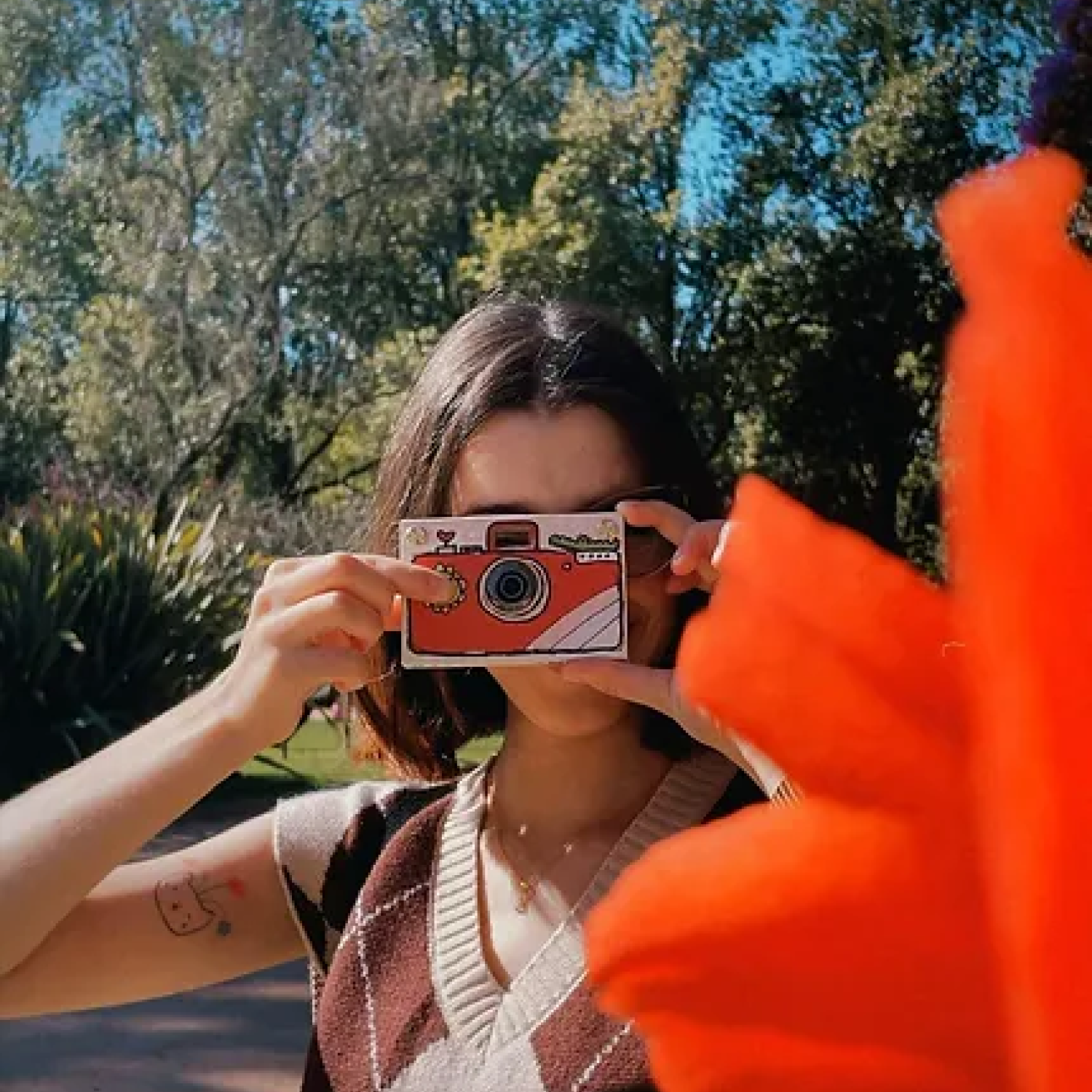
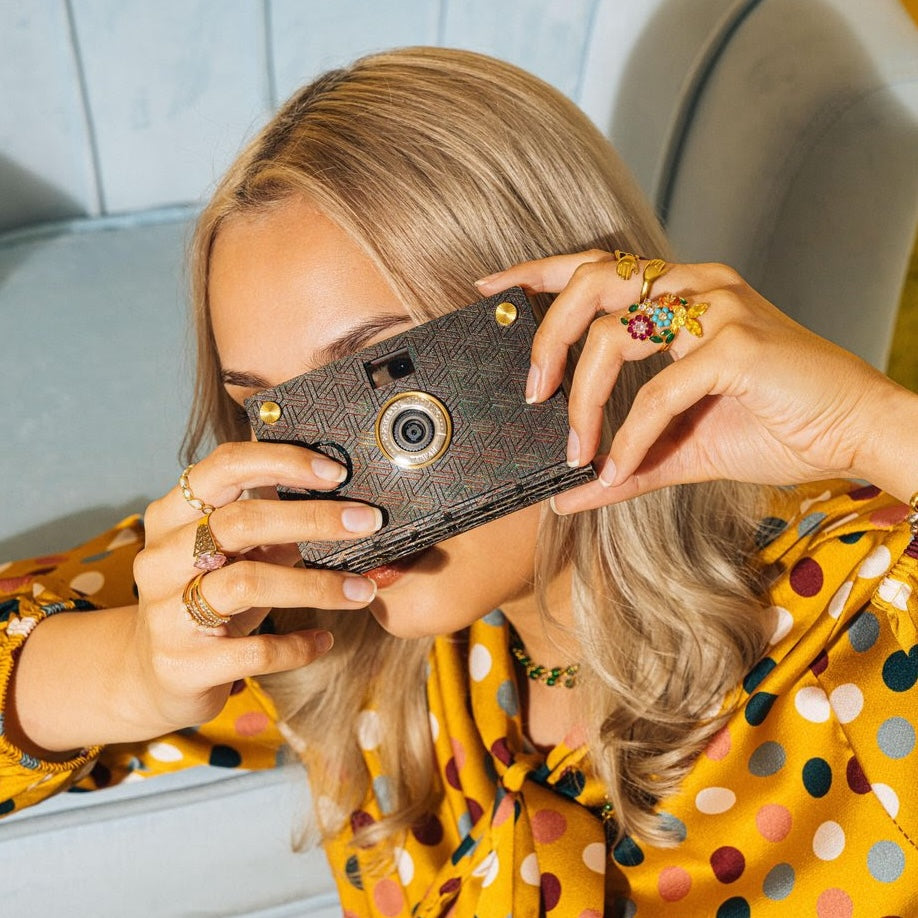
No check screen means you do not lose the scene while evaluating it. You press, you put the camera back in your pocket, you keep walking. You are in the street, not above it.
And that lightness of gesture creates something unexpected: photos that look like what you actually saw. Not what you tried to construct. What you moved through.

Choose Your Filter Based on Your Destination
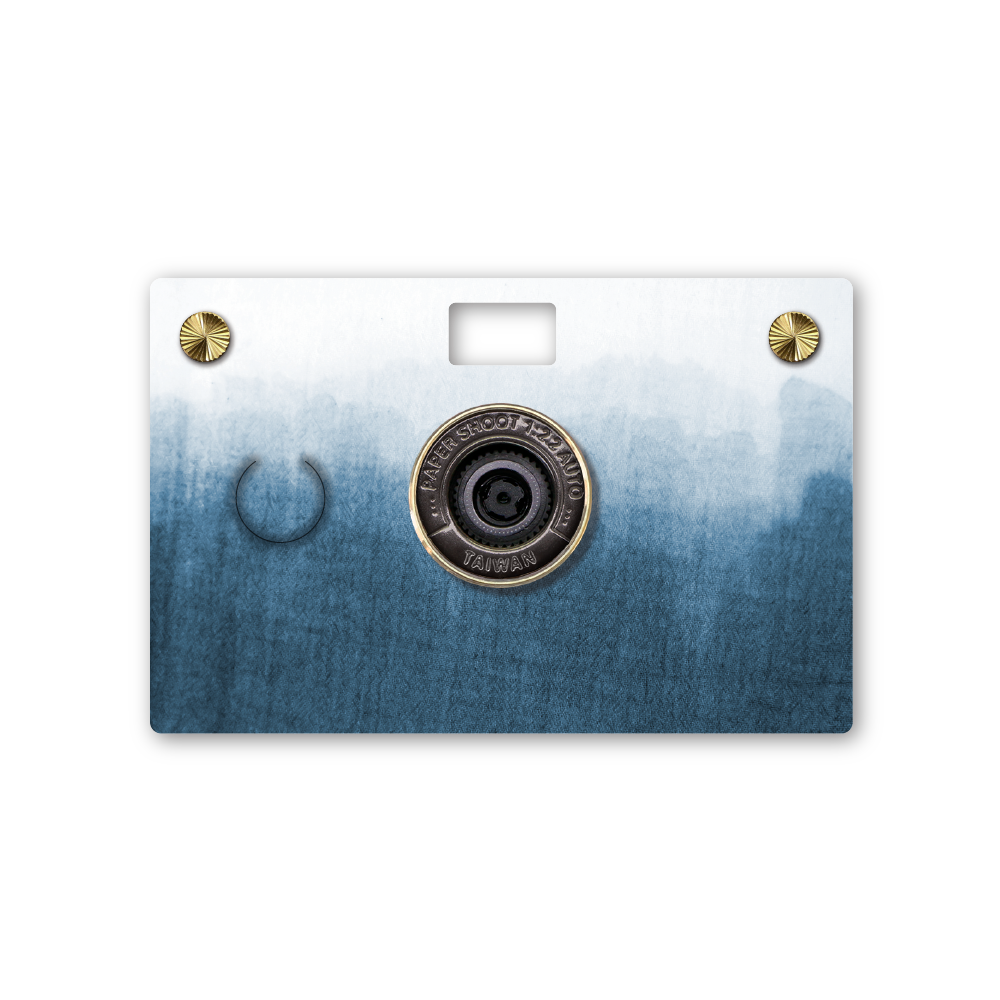
- Colour: for colourful cities, markets, Mediterranean landscapes. Slightly desaturated tones, film feel, natural warmth.
- Black and white: for street photography, portraits, architecture. Rainy city trips. Scenes where light does all the talking.
- Sepia: for deserts, evening light in the South, souks, anything worth keeping as a golden memory.
- Blue: for northern countries, the sea, morning mist, autumn skies. And paired with an external battery, for 10-second Full HD video clips.
Decide before you leave. Let it run all day. Your photos will have a coherence that reads like a real story, not a random selection.
Filter Cards: Adapt Your Camera to Every Trip
Filter cards let you customise the look based on your destination. Classic Film for an American road trip, Teal & Orange for sea sunsets, Moody for northern capitals under clouds. Each card slots in within seconds. The camera takes on a new personality. So does your trip.
Practical in Travel: What Paper Shoot Has Going for It
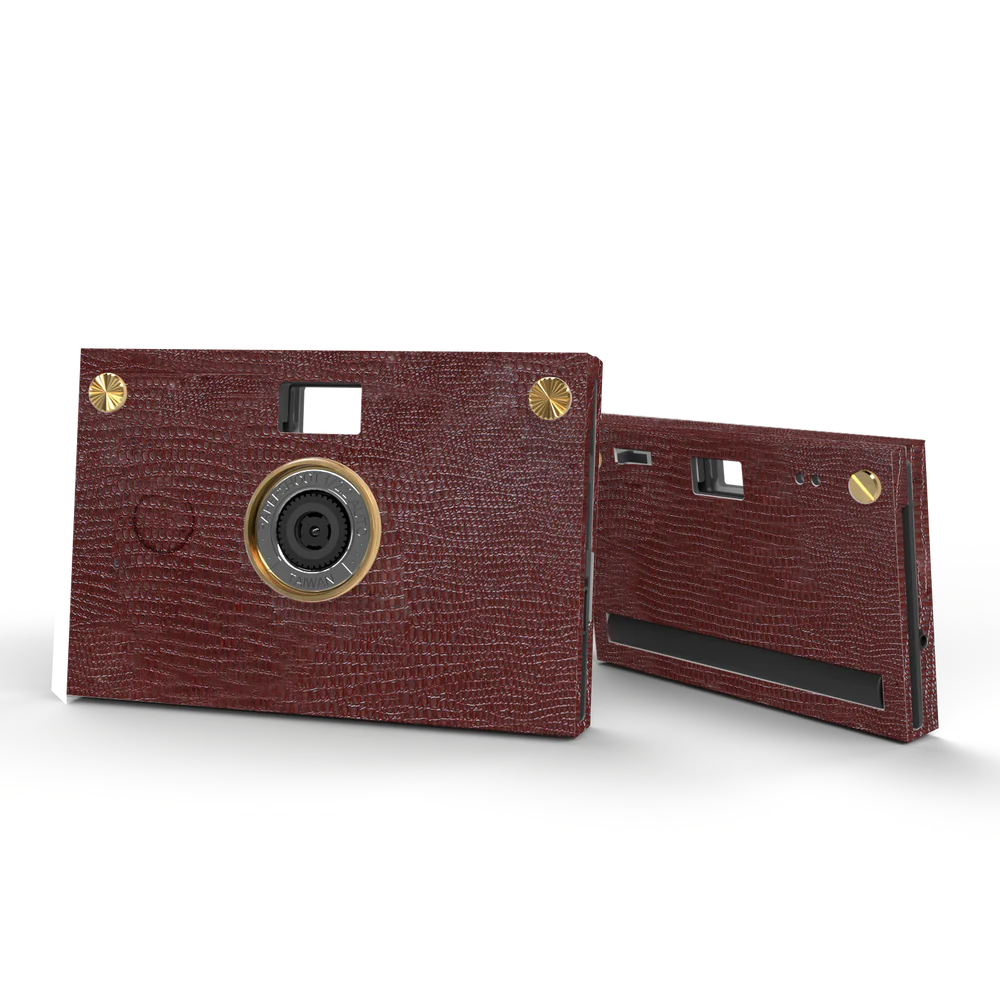
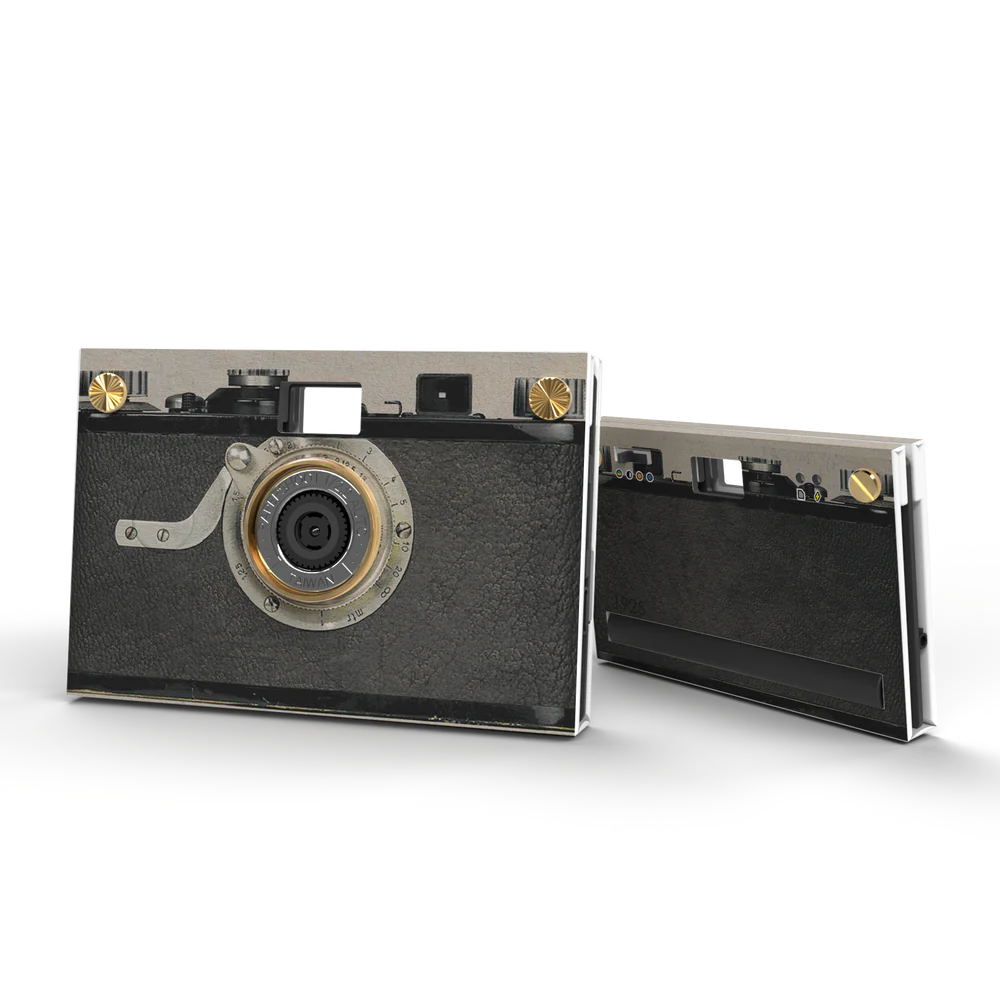
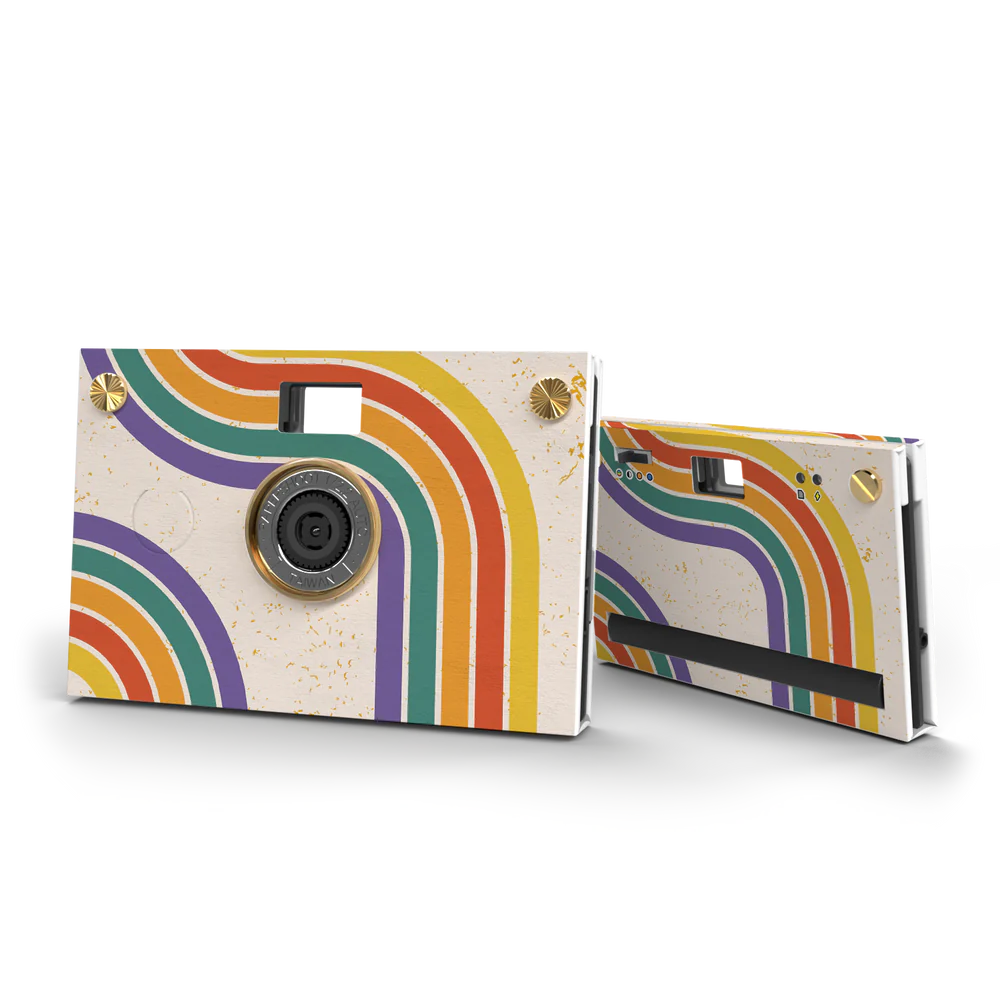
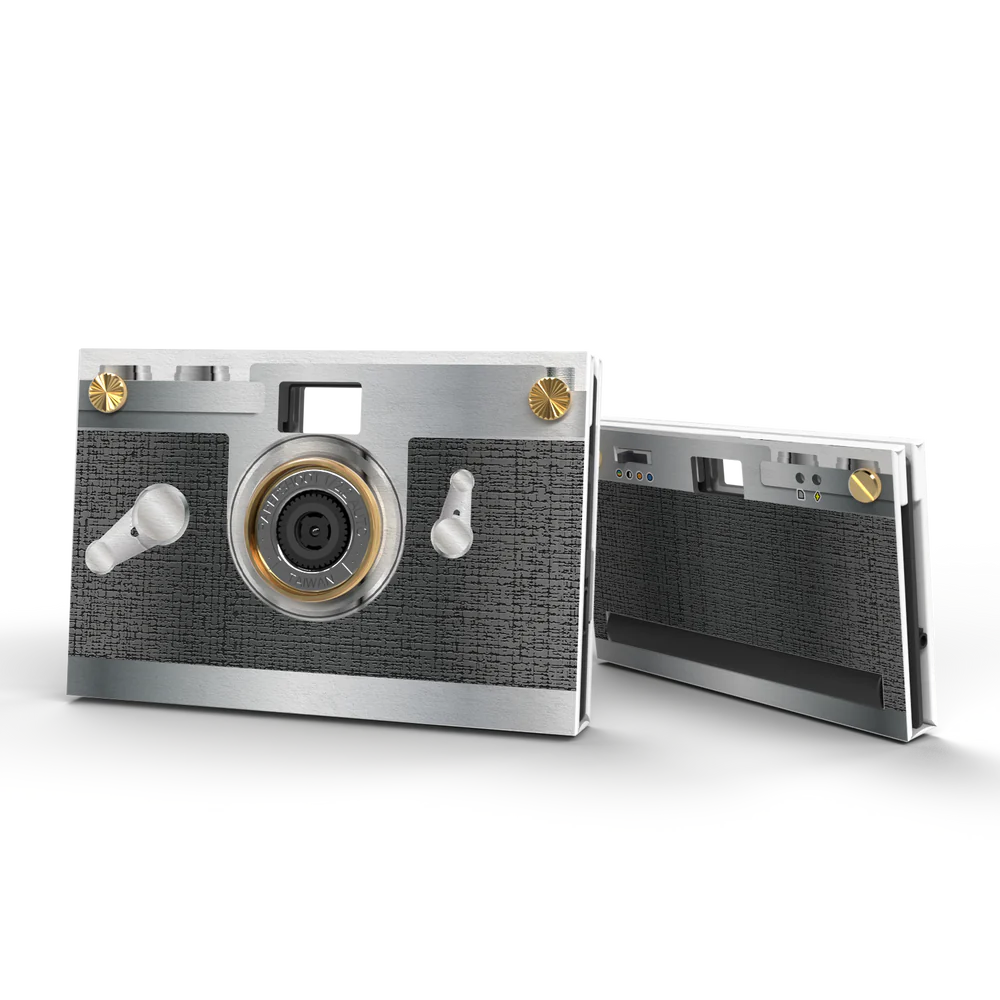
- Featherlight. It fits in a jeans pocket. You forget it in the bag until you need it.
- Replaceable rechargeable AAA batteries. Run flat in Barcelona? AAA batteries are available in any corner shop in the world. No proprietary charger to carry, no panic if the cable stayed at the hotel.
- 300 to 500 photos per charge. More than enough for a full day of sightseeing.
- 64GB SD card included. Thousands of photos. Storage is no longer a thought.
- No app, no Wi-Fi, no sync to manage. Plug in, copy, look. That is it.
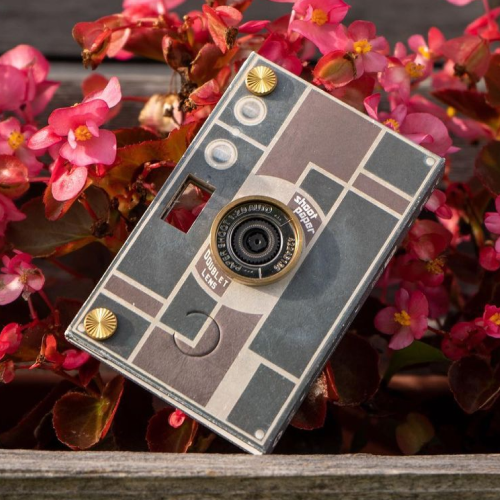
- Cases in durable materials. Paper stone, vegetal fibre, rosewood: not hollow plastic that gets scratched at the bottom of a bag.
What About Museums, Dark Restaurants, Night Shots?
Honestly: Paper Shoot is not a professional reportage camera. In very low light without a window, it will produce grainy photos. For many people that grain is precisely the charm — it is the signature of a real moment, not a reconstruction. But if you need perfectly sharp images at midnight in a nightclub, it is not the right tool.
For everything that happens in daylight — which is the bulk of a trip — it performs remarkably well for its size and price.
The Real Criterion: Which Camera Will You Actually Use More?
This is the question none of the comparison guides ask. A 900-euro camera that stays in the bag because it is too heavy to take out for every instant is worth less, photographically, than a camera you pull out instinctively ten times a day.
The best travel camera is the one you actually photograph with. Not the one that scores best in a lab test.
To understand how Paper Shoot compares to other vintage digital cameras, our full guide is here: Which vintage digital camera should you choose in 2026?